

SO, why do I do what I do?
I believe that disabled people deserve more than simply surviving within systems that were supposedly designed to support them. They deserve autonomy, dignity, accessibility, genuine choice and the opportunity to live their lives on their own terms.
Unfortunately, the reality is often very different.
Far too many of our systems, including the NDIS, education, healthcare and broader social services, continue to place the burden of accessibility on the very people they are meant to support. People with disability are routinely expected to justify their needs, prove their disability, navigate unnecessarily complex processes and advocate relentlessly for supports that should never have been so difficult to access in the first place.
I don't believe disabled people should have to become experts in bureaucracy just to have their basic needs met.
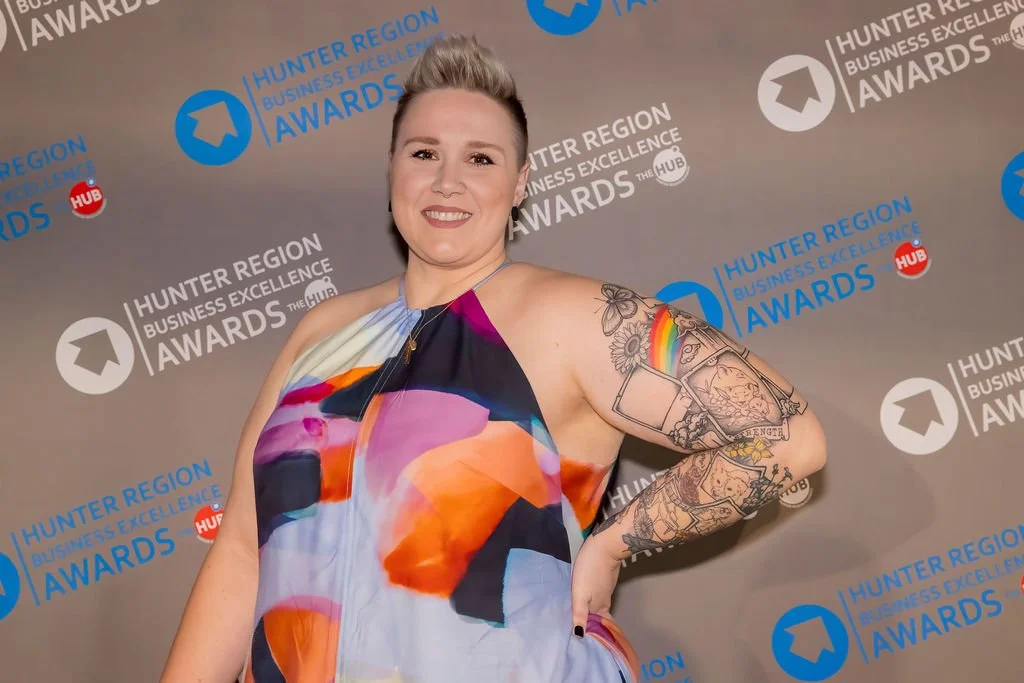
As a late-diagnosed Autistic and ADHD woman, a person living with multiple chronic illnesses and disabilities, a survivor of gender-based violence and childhood sexual abuse, and a parent to neurodivergent children, my commitment to this work is deeply personal.
I know what it feels like to spend a lifetime trying to fit into spaces that were never designed with people like me in mind. To mask, minimise and modify who you are to meet societal expectations. To be misunderstood, dismissed or made to feel that your needs are unreasonable simply because they differ from what society considers typical.
And I know how exhausting it is to continually fight to be heard.
I don't want that to be the experience of the people I support.
My practice is grounded in the Social Model of Disability, neurodiversity-affirming principles, trauma-informed practice and a human rights-based approach. I recognise that disability does not exist in isolation from the social, environmental and systemic barriers that shape people's lives.
I don't believe the solution is to continually force PWD to adapt to inaccessible systems. I believe those systems need to change.
My role is not to speak over people, make decisions on their behalf or decide what a meaningful life should look like for them. It is to work alongside them, share knowledge, challenge barriers and support them to exercise their own choice, control and self-determination.
Sometimes that means navigating complex systems, challenging decisions or advocating for access to appropriate supports. Other times, it means creating a space where someone can finally feel understood, respected and accepted without having to explain, justify or minimise who they are.
You should never have to make yourself smaller to be worthy of support.
Beyond my individual practice, I am committed to systemic advocacy and reform. I believe that lived and living experience must be recognised as expertise, and that the people most affected by policies and decisions deserve meaningful involvement in shaping them.
I am not afraid to ask difficult questions, challenge established practices or speak out when systems cause harm. I have never been particularly good at accepting "that's just how things are" as an answer, especially when those things perpetuate inequity, exclusion or injustice.
I've been described as a "bulldog" before, and I still consider that one of the greatest compliments I've received.
But ultimately, this work is about more than challenging systems.
It's about contributing to a future where disabled people are not required to fight for their fundamental rights. Where neurodivergent children can grow up feeling understood, supported and celebrated rather than spending adulthood unpacking the trauma of being forced to conform. Where survivors of violence are believed, respected and supported. And where accessibility, inclusion and autonomy are the expectation, rather than the exception.
I cannot change every system, remove every barrier or fix every injustice. But I can refuse to contribute to the harm, use my knowledge and experience to challenge it, and do what I can to make the journey easier for others.
Because people living with disability deserve better than the bare minimum.
And I have no intention of pretending otherwise.